
Arnold NextG Blogspot: Autonomous Public Transit – How Cities Are Becoming Mobility Pioneers
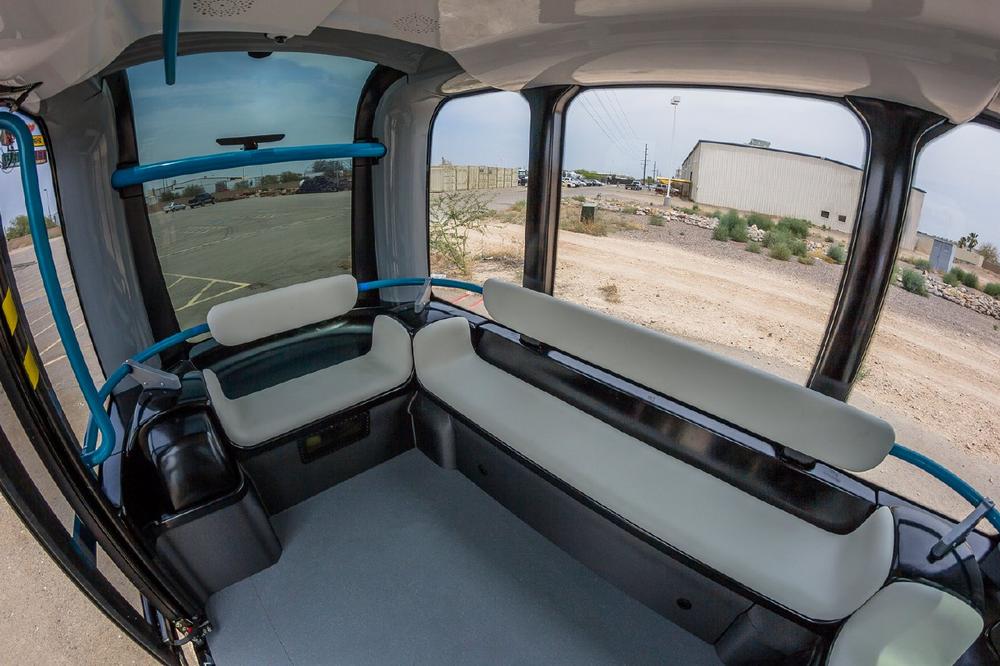
One of the most pressing issues is the lack of qualified drivers. According to the Association of German Transport Companies (VDV), tens of thousands of bus drivers will be needed in the coming years. At the same time, expectations for barrier-free, low-emission, and demand-responsive services continue to rise – especially in rural areas and during off-peak hours. Autonomous shuttles are a practical means of closing these gaps and ensuring service continuity in public transport.
Technology groundwork since 2017
The foundations were laid early. As far back as 2017, cities such as Berlin, Lyon and Tallinn began testing autonomous minibuses. These initial deployments focused on confined operational zones, typically covering last-mile shuttle routes. Funding programs such as Germany’s “e-Bus Model Project” and EU initiatives like Horizon 2020 supported these efforts. Vehicle prototypes came from manufacturers like Navya and EasyMile, often in collaboration with research institutions.
A key technological milestone during this period was the “Space Drive” system by Paravan, originally developed for accessible mobility. It was deployed in the autonomous shuttle “Olli” by Local Motors, serving as a fully electronic steering system with no mechanical linkage. Even then, the architecture met ISO 26262 ASIL D requirements for functional safety – showcasing Drive-by-Wire as a safety-critical subsystem for autonomous use cases (Omnibusrevue).
Status in 2025: Regular operation within reach
As of 2025, approximately 20 German cities are testing driverless shuttles in public space – with increasing emphasis on operations without onboard safety drivers. In Berlin, a project on the EUREF Campus is actively preparing for Level-4 service starting in 2026. Similar pilots are underway in Hamburg, Karlsruhe and Osnabrück – each tailored to local infrastructure, topography and municipal goals.
The legal framework has evolved significantly: Since 2021, § 1d of the German Road Traffic Act (StVG) and the Autonomous Vehicles Approval Ordinance (AFGBV) have defined the criteria for Level-4 deployment in public traffic. These regulations address system responsibility, functional redundancy, and safety protocols. In December 2025, the Remote Driving Ordinance (StVFernLV) took effect. It allows remote-controlled vehicle operation from control centers – under strict safety requirements, certified operational areas, and redundant vehicle architecture. For the first time, teleoperation is now legally recognized as a fallback or supplement to autonomy. (Quellen: § 1d StVG, AFGBV, StVFernLV)
Looking ahead: Autonomous shuttles as core public mobility services
Industry projections suggest that by 2028, autonomous peoplemovers will become a regular feature in urban mobility – starting in new developments and expanding to serve as feeders for existing transit lines. Germany’s Federal Ministry of Transport has announced targeted funding as part of its digital public mobility strategy.
In parallel, manufacturers such as Renault, ZF and Bertrand are developing dedicated platforms for urban autonomous vehicles. These next-gen systems combine Drive-by-Wire, energy management and connectivity within modular, low-maintenance vehicle architectures.
Technological requirement: Safety through redundancy
A certifiable safety architecture is essential for every Level-4 deployment in public transit. The NX NextMotion platform from Arnold NextG meets this requirement with triple-redundant systems for steering, braking and propulsion. Designed for 24/7 operation in urban environments, the platform is IP69K-rated and ASIL D-certifiable. It also supports secure teleoperation via standardized interfaces – a key capability during the transition to full driverless service.
Thanks to its modular design, NX NextMotion can be integrated into a wide range of vehicle types – from compact shuttles and midibuses to custom platforms. The technological convergence of Drive-by-Wire, software-in-the-loop validation and onboard diagnostics marks a paradigm shift: Vehicles are evolving into dynamically configurable platforms – controllable, certifiable and ready for continuous operation.
We control what moves.
Über Arnold NextG:
Arnold NextG realisiert die Safety-by-Wire®-Technologie von morgen: das mehrfach redundante Zentralsteuergerät NX NextMotion ermöglicht eine ausfallsichere und individuelle Implementierung, fahrzeugplattform-unabhängig und weltweit einzigartig. Mit dem System können autonome Fahrzeugkonzepte sicher und nach den neuesten Hard- und Software- sowie Sicherheitsstandards umgesetzt werden, ebenso wie Remote-, Teleoperation- oder Platooning- Lösungen Als unabhängiger Vorausentwickler, Inkubator und Systemlieferant übernimmt Arnold NextG die Planung und Umsetzung – von der Vision bis zur Straßenzulassung. Mit der Straßenzulassung von NX NextMotion setzen wir den globalen Drive-by-Wire-Standard. www.arnoldnextg.de
About Arnold NextG:
Arnold NextG realizes the safety-by-wire® technology of tomorrow: The multi-redundant central control unit NX NextMotion enables a fail-safe and individual implementation, independent of the vehicle platform and unique worldwide. The system can be used to safely implement autonomous vehicle concepts in accordance with the latest hardware, software and safety standards, as well as remote control, teleoperation or platooning solutions. As an independent pre-developer, incubator and system supplier, Arnold NextG takes care of planning and implementation – from vision to road approval. With the road approval of NX NextMotion, we are setting the global drive-by-wire standard. www.arnoldnextg.com
Arnold NextG GmbH
Breite 3
72539 Pfronstetten-Aichelau
Telefon: +49 171 5340377
http://www.arnoldnextg.de
