FEV collaborates with Microsoft and NVIDIA on efficient Generative AI models for in-car applications

Breaking News:
HERMLE C 22 MT – Hochintegrierte Komplettbearbeitung für anspruchsvolle Fertigungsaufgaben
Green IT: Warum Nachhaltigkeit in der IT kein Trend ist, sondern ein Wettbewerbsvorteil
IT-Sicherheit im Datacenter: Maximale Sicherheit für geschäftskritische IT-Infrastrukturen
HERMLE erweitert Automationsportfolio: Robotersystem RS 1 jetzt in GEN2-Ausführung
40 Jahre Rietzler Gruppe: Jubiläum im Zeichen starker Partnerschaften
Freitag, Juli 10, 2026
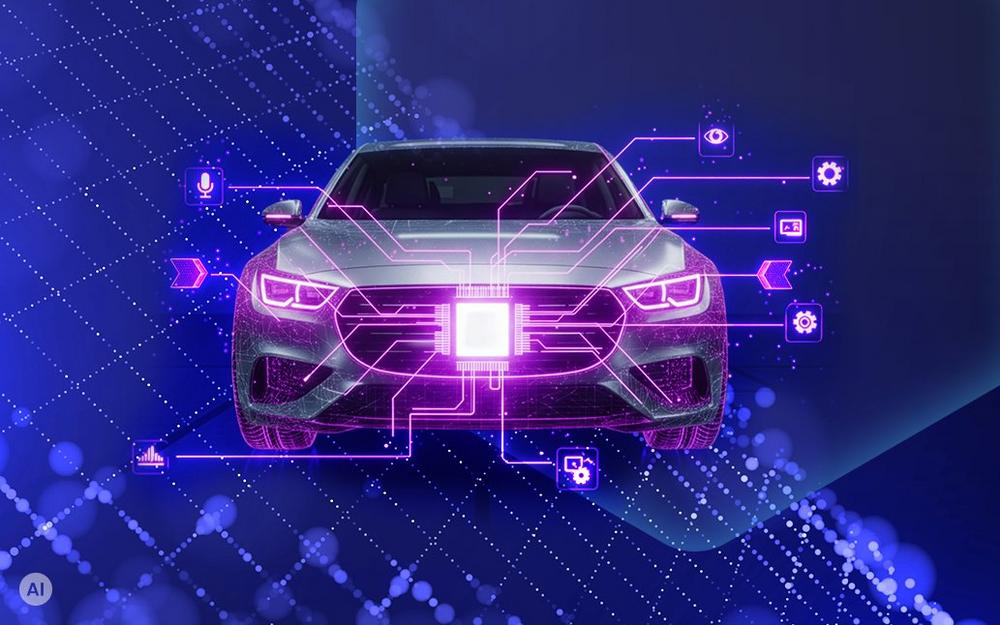
The focus is on the use of small language models (SLM) such as Microsoft’s Phi-4-mini-instruct in Microsoft Foundry that is powered by NVIDIA DRIVE AGX accelerated compute. The solution allows vehicle functions such as the dashboard or individual vehicle profiles to be configured by voice command. At the same time, the system acts as robust local backup intelligence for cloud-based large language models (LLMs).
More intelligence, robustness and efficiency in the software-defined vehicle
Embedded small language models increase the functional intelligence level of modern vehicles and improve the responsiveness and availability of AI-powered functions. Since inference takes place directly in the vehicle, central functions remain available even when there is a limited or no internet connection. In addition, embedded SLMs enable a reduction in backend and infrastructure costs, as cloud-based LLMs can be supplemented or partially replaced depending on the use case. This helps OEMs economically scale software-defined vehicle functions.
“Our collaboration with Microsoft and NVIDIA showcases how small, efficient language models can transform in-vehicle experiences, delivering powerful functionality without the overhead of larger systems,” said Thomas Hülshorst, Group Vice President Intelligent Mobility and Software at FEV.
“By combining advanced AI frameworks with domain- and task-specific optimizations, FEV and Microsoft are shaping the future of intelligent, voice-driven interfaces that meet the high standards of automotive deployment,” added Boris Scholl, Vice President of Engineering at Microsoft.
Central fields of application for embedded GenAI
As part of the cooperation, FEV is investigating several fields of application with high series potential:
Multimodal System Architecture on NVIDIA Platforms
The underlying architecture is designed as a multimodal system and processes speech, text and visual information. To achieve high performance in the constrained environment of an embedded in-vehicle environment, FEV has used synthetically generated data curated with NVIDIA NeMo in the fine-tuning process to optimize the Phi-4-mini-instruct model. This is followed by integration and deployment of the resulting model running on NVIDIA DRIVE AGX enabling further improvement in model performance. The AI functions are operated as modular software services inside the vehicle.
Showcase: Personalized vehicle and HMI configuration
Building on these technologies, FEV has developed a dashboard configurator showcase that highlights the potential of intelligent in-vehicle interfaces. Using natural voice commands, a locally deployed small language model dynamically updates the dashboard—reducing reliance on continuous cloud connectivity while enabling fast, responsive performance.
Completed in just a few weeks, the showcase demonstrates strong real-time performance. In the future, FEV plans to gradually supplement or replace cloud-based AI functions via models that run locally in the vehicle.
FEV as a development partner for GenAI solutions
FEV is contributing its extensive expertise in the areas of software-defined vehicles, AI integration and additional development solutions. The company’s portfolio spans the entire value chain, from use case definition through architecture and system design to validation and industrialization. The results of the collaboration are currently being tested in demo vehicles and will serve as the basis for further customer projects and near-series applications later this year. In addition, FEV is focused on bidirectional communication between the driver/passenger and vehicle across a wide range of use-cases.
FEV has always pushed the limits.
FEV is a globally leading engineering provider in the automotive industry and internationally recognized leader of innovation across different sectors and industries. Professor Franz Pischinger laid the foundations by combining his background in academia and engineering with a great vision for continual progress. The company has supplied solutions and strategy consulting to the world’s largest automotive OEMs and has supported customers through the entire transportation and mobility ecosystem.
As the world continues to evolve, so does FEV.
That’s why FEV is unleashing its technological and strategic expertise into other areas, applying its forward thinking to the aerospace and energy sectors. Thanks to its software and system expertise, the company also leads the way making intelligent solutions available to everyone. FEV brings together the brightest minds from different backgrounds and specialties to find new solutions for both current and future challenges.
But FEV won’t stop there.
Looking ahead, FEV continues to push the limits of innovation. With its highly qualified 5,600 employees at more than 45 locations globally, FEV imagines solutions that don’t just meet today’s needs but tomorrow’s. Ultimately, FEV keeps evolving – to a better, cleaner future built on sustainable mobility, energy and software that drives everything. For the company’s partners, its people and the world. #FeelEVolution
FEV
Neuenhofstr. 181
52078 Aachen
Telefon: +49 (241) 5689-0
http://www.fev.com
