
How Automation Is Redefining Competitiveness in Laser Engraving Job Shops
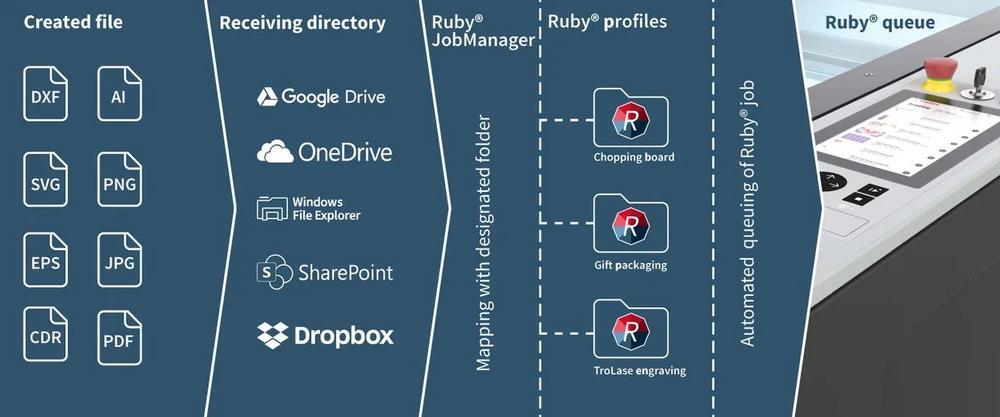
In many engraving businesses, workflows remain fragmented. Orders often arrive via multiple channels, are manually prepared, and then transferred into production systems. This lack of integration increases processing time, introduces errors, and drives operational costs—directly impacting margins. At the same time, demand is shifting toward small batch production and high product diversity. Applications such as stamps, trophies, signage, badges, nameplates, and personalized gifts require flexible yet efficient processes across multiple materials. Without streamlined workflows, this complexity results in bottlenecks, downtime, or missed revenue opportunities.
While the industry has traditionally focused on machine performance, the competitive reality is shifting. Today, efficiency gains are increasingly found before and after the laser process—in how jobs are prepared, managed, and reproduced. Integrated laser software platforms are enabling this transformation by connecting design, preparation, and production into a continuous workflow. By reducing manual intervention, these systems help shorten turnaround times, improve consistency, and minimize the risk of production errors.
Solutions such as Ruby laser software illustrate this shift toward workflow-centric production. Browser-based environments allow operators to access jobs across devices, while integrated tools simplify design handling and job preparation. This reduces dependency on multiple software systems and helps streamline operations from order intake to finished product—particularly valuable in high-mix production environments.
Consistency is another critical factor. Recurring orders require identical quality levels, and automated workflows allow settings and jobs to be stored and reproduced reliably. This ensures repeatability while saving time on job setup. In addition, automation supports operational reliability. Structured workflows and digital job management help reduce production errors and unplanned downtime—two major cost drivers in engraving businesses. Preventive maintenance routines can also be better integrated, minimizing disruptions and protecting margins.
Ultimately, the most competitive job shops are those that move beyond standalone equipment and adopt a holistic, software-driven approach to production efficiency.
As the engraving industry evolves toward greater customization and faster delivery cycles, the ability to automate and integrate workflows is becoming essential. Businesses that optimize not only their machines but also their processes will be better positioned to reduce costs, increase throughput, and maintain consistent quality in a demanding market environment.
Learn more about how automation transforms engraving workflows with Ruby:
Trotec is a global leader in laser technology, setting new standards in the field. As part of the TroGroup, this European innovation leader develops, produces and markets laser systems and machines for marking, cutting and engraving a variety of materials and substances. The product portfolio is rounded off with extraction systems and laser and engraving materials. Trotec’s 14 sales subsidiaries and around 700 employees support more than 40,000 systems in 90 countries. The export share is 97 per cent, and the current turnover for 2022 is €161 million. www.troteclaser.com
www.troteclaser.com
Trotec Laser GmbH
Freilinger Straße 99
A4614 Marchtrenk
Telefon: +43 7242 239-7777
Telefax: +43 7242 239-7380
http://www.troteclaser.com
