Deep-Sea Mining: Japan Takes the Next Step

Breaking News:
Jonglierkurs: 3 Bälle jonglieren lernen für Anfänger am Dienstag, 22. Sept. um 18 Uhr in München
FQ-42 „Vengeance“ findet ein neues Zuhause auf der Creech Air Force Base
Willkommen an Bord: Hochschule Osnabrück begrüßt rund 3.100 neue Erstsemester
Preisträger des diesjährigen Semmelweis-Richter International Journalism Award bekannt gegeben
Dienstag, Sep. 22, 2026
Advertisement – This article is distributed on behalf of Aurania Resources Ltd. and Canada Nickel Company Inc., with which SRC swiss resource capital AG has paid IR consulting agreements. · Publisher: SRC swiss resource capital AG · Author: Ingrid Heinritzi · First published: August 7, 2026, 10:20 a.m. Zurich/Berlin ·
Japan is pushing ahead with the extraction of rare-earth sludge from the seabed within its exclusive economic zone surrounding the remote Pacific island of Minami-Torishima. Between January 12 and February 14, 2026, the Japanese Marine Science and Technology Agency (JAMSTEC) tested a closed-loop extraction system using the deep-sea drilling vessel “Chikyu” at a water depth of approximately 6,000 meters. A more extensive mining trial, lasting about one month, is scheduled for February 2027. Based on the data collected during this trial, the technical and economic feasibility of domestic rare earth production will also be assessed by March 2028.
The sediments contain rare earth elements, including yttrium. While these elements are not universally rare from a geological perspective, they are considered critical to the supply chain due to concentrated mining and processing capacities, as well as their importance for electronics, high-performance magnets, and other key technologies. Japan’s trial is therefore primarily a signal regarding technology and industrial policy: The country wants to examine whether an additional, domestic source of raw materials can be technically managed and economically exploited.
Who decides on deep-sea mining?
The Japanese test site is located within Japan’s exclusive economic zone. It is therefore not subject to direct regulation by the International Seabed Authority (ISA). The Jamaica-based organization is responsible for mineral activities in the international seabed area beyond national jurisdiction. Although exploration contracts have been awarded there, commercial exploitation has not yet been approved. Member states are still negotiating a binding set of rules, including environmental standards and monitoring mechanisms.
The debate centers on potential damage to poorly understood deep-sea ecosystems, sediment plumes, noise, habitat disruption, and the question of how long-term impacts can be monitored. Germany therefore continues to support a precautionary moratorium until the risks have been sufficiently investigated and strict rules have been established. At the same time, German authorities and research institutions are participating in the scientific exploration of the seabed. Research and the political call for restraint in commercial extraction are thus not mutually exclusive.
Economically as well, the transition from pilot operations to continuous production remains challenging. Extraction technology, energy consumption, material transport, processing, and environmental monitoring must function reliably at great depths. Until these questions are convincingly answered, terrestrial deposits, recycling, and more efficient use of raw materials will remain the cornerstones of the supply of nickel, cobalt, copper, and other critical metals.
In this context, Canada Nickel Company Inc. – https://www.commodity-tv.com/ondemand/companies/profil/canada-nickel-company-inc/ – is developing several nickel sulfide projects in the Timmins Nickel District in Ontario. For its flagship Crawford project, the company received a positive Decision Statement from Canada’s Minister of Environment, Climate Change, and Nature on July 31, 2026. This marked the conclusion of the federal environmental and impact assessment with a positive decision. Canada Nickel described Crawford as the first mining project to receive such a decision under the Canadian Impact Assessment Act, as amended by the 2019.
The decision is a major regulatory milestone, but does not yet guarantee construction or production. According to the company, detailed planning, project financing, and additional provincial and federal permits are still pending. Canada Nickel aims to secure a construction decision in 2027. Whether and when Crawford will actually be built and brought into production therefore continues to depend on financing, permits, construction execution, metal prices, and other technical and economic factors.
At the same time, the company is expanding its resource base in the region. With the first mineral resource estimate for Nesbitt, Canada Nickel announced in July 2026 the ninth property with a published resource estimate in the Timmins area. Across these nine projects, the company’s reported measured and indicated mineral resources totaled approximately 4.36 billion metric tons averaging 0.24 percent nickel; in addition, there were approximately 5.70 billion metric tons of inferred mineral resources averaging 0.23 percent nickel. Mineral resources are not to be equated with mineral reserves. Inferred resources also have a lower degree of geological certainty and should not be interpreted as a proven economic basis.
Aurania Resources Ltd. – https://www.commodity-tv.com/ondemand/companies/profil/aurania-resources-ltd/ – is focusing a growing portion of its activities on precious metals and critical raw materials in Europe. At the Balangero project in northern Italy, the company is working with partners to investigate the potential recovery of nickel, cobalt, and other metals from historic mine tailings. In February 2026, Aurania released laboratory results for 28 samples collected. According to the company, these samples contained 1,560 to 2,015 ppm of nickel, 81.5 to 108 ppm of cobalt, and 16.2 to 146 ppm of copper. These were sample analyses and not drill results. The work is in an early evaluation stage; no mineral resource or economic viability can yet be derived from the data collected to date.
In France, a wholly owned subsidiary of Aurania was granted the three exploration permits—Epona, Taranis, and Bélénos—in December 2025 for gold and polymetallic minerals in Brittany and the adjacent Pays de la Loire region. In Iceland, Aurania holds an interest in the Thormodsdalur gold-silver project—also known as Thor—through an option agreement. By incurring exploration expenditures totaling $5 million over four years, the company can initially acquire a 70 percent stake. These projects are also in the exploration phase and are subject to the geological, financial, and permitting risks typical of early-stage projects.
Conclusion: The Deep Sea Remains an Option—Onshore Projects Remain Crucial
Japan’s program demonstrates that the technical development of mineral resources in extreme water depths is advancing. However, this does not yet imply that deep-sea mining will be economically viable on an industrial scale. Regulatory, environmental, and economic hurdles remain high. For the supply of critical metals, therefore, onshore projects, recycling, and material efficiency are likely to remain crucial for the foreseeable future.
With the federal government’s positive decision regarding Crawford, Canada Nickel has made significant progress toward the potential implementation of the project, but it must still overcome further hurdles related to permitting, financing, and construction. Aurania Resources is pursuing several early-stage exploration and reprocessing initiatives in Europe, whose technical and economic potential must first be confirmed through further work. Both companies thus offer different approaches to the issue of critical raw materials—one through an advanced nickel project, the other through a diversified portfolio of early-stage European projects.
Current company information and press releases from Canada Nickel Company (- https://www.resource-capital.ch/de/unternehmen/canada-nickel-company-inc/ -) and Aurania Resources (- https://www.resource-capital.ch/de/unternehmen/aurania-resources-ltd/ -).
You can also find further information in our new Battery Metals Report at the following link: https://www.resource-capital.ch/de/reports/ansicht/batteriemetall-report-2026-03/.
Best regards
Yours,
Marc Ollinger
CEO, Swiss Resource Capital AG
Technical Basis and Qualified Persons: The technical data regarding Canada Nickel’s mineral resources is based on the company’s press release dated July 23, 2026. Stephen J. Balch, P.Geo. (Ontario), Vice President of Exploration at Canada Nickel and a Qualified Person as defined by NI 43-101, has verified the data published therein and reviewed and approved the technical information. Dr. Scott Jobin-Bevans, P.Geo., of Caracle Creek International Consulting Inc., served as the independent Qualified Person responsible for the mineral resource estimates for Nesbitt and Deloro. The geological data for the Balangero Project are based on Aurania’s press release dated February 26, 2026; whose geological content was reviewed and approved by Jean-Paul Pallier, MSc, EurGeol, Vice President of Exploration at Aurania and a Qualified Person as defined by NI 43-101. The aforementioned QP approvals refer exclusively to the respective primary sources and not to this German-language article.
Sources and Data as of
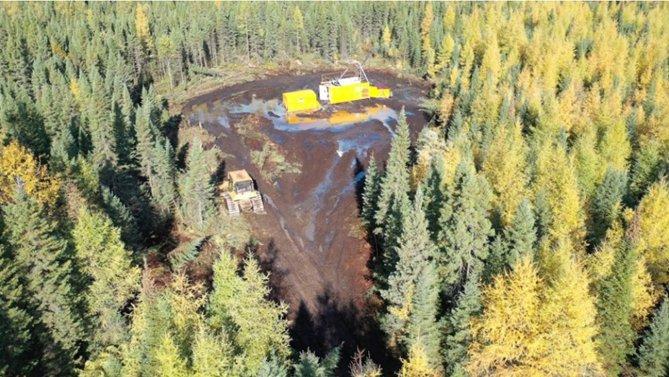
Intro-Picture: Canada Nickel Company
Important Information, Conflicts of Interest, and Disclaimers
Nature of the Article and Conflict of Interest: This article is a paid advertising and marketing communication (advertorial) and not an independent financial analysis. SRC Swiss Resource Capital AG receives compensation from Aurania Resources Ltd. and Canada Nickel Company Inc. for investor relations consulting and communications services. This gives rise to a material conflict of interest that may influence the selection of the companies discussed as well as the presentation.
Transparency Notice Regarding Conflicts of Interest pursuant to Article 20 of Regulation (EU) No. 596/2014 (MAR) in conjunction with Delegated Regulation (EU) 2016/958 and Section 85 of the German Securities Trading Act (WpHG): The author’s own positions in the shares of the issuers discussed: none. Net position of SRC Swiss Resource Capital AG in the shares of each of the two issuers discussed: less than 0.5 percent of the issued share capital in each case. Holding of at least 5 percent by a discussed issuer in SRC Swiss Resource Capital AG: no. Compensated relationship: IR consulting and communications contracts with both issuers. There are no plans to update this article; statutory obligations to correct or update the information remain unaffected. The circumstances and publicly available information as of the editorial deadline on August 5, 2026, at 10:00 a.m. Zurich/Berlin are decisive.
Methodology, data as of, and scope: This article is based on the official publications and company announcements listed in the bibliography. Figures, where provided, were taken from the primary sources and have been rounded in some cases. Facts, company information, forward-looking statements, and editorial assessments have been linguistically separated from one another. The discussion of deep-sea mining distinguishes between areas within national jurisdiction and the international seabed area regulated by the International Seabed Authority ( ). The mineral resources mentioned in this article are not mineral reserves and, on their own, do not prove economic viability.
No Individual Investment Advice: The information provided is for general informational purposes only. It is not tailored to the personal investment objectives, financial situation, or risk tolerance of any individual and does not constitute individual investment advice or a solicitation or offer to buy or sell securities or other financial instruments. Investment decisions should be made solely on the basis of your own due diligence and, if necessary, with the assistance of independent professional advice.
Risks: Securities of commodity, mining, exploration, and project development companies are associated with significant risks. These include, in particular, commodity price, currency, financing, dilution, permitting, construction, operational, environmental, technical, political, and country-specific risks. Exploration work may end without a commercially viable discovery. Mineral resources may prove to be inaccurate or may not be converted into mineral reserves. Project developers may fail, exceed schedules and cost budgets, or raise additional capital on terms that are disadvantageous to existing shareholders. Losses in share price, up to and including the complete loss of the capital invested, are possible. Past performance, historical market prices, sample and exploration results, and study data do not provide a reliable basis for predicting future results.
Forward-Looking Statements and Technical Information: This article contains forward-looking statements, corporate objectives, and scientific and technical information from company publications. These are based on assumptions, estimates, and expectations as of the respective publication date. Actual results may differ significantly due to known and unknown risks. In particular, expected approvals, construction decisions, production start-ups, project timelines, resource estimates, and economic prospects do not constitute a guarantee of actual implementation. The technical information has not been independently verified by SRC Swiss Resource Capital AG but has been taken from the primary sources listed in the bibliography. The approvals by Qualified Persons mentioned therein refer exclusively to the respective primary sources and not to this German-language article.
Accuracy, Completeness, and External Content: The content was prepared with editorial care based on the sources cited, which are considered reliable. However, no guarantee can be given regarding accuracy, completeness, timeliness, or continued availability. Mandatory statutory liability provisions remain unaffected. The operators of external websites are solely responsible for their content. Linked content was reviewed at the time the link was created; ongoing monitoring without specific indications of legal violations is not reasonable. If illegal content becomes known, the corresponding links will be removed.
Use of AI-Supported Systems: AI-supported systems may be used as editorial tools in the creation and editing of our content, particularly to assist with research, analysis, structuring, and linguistic revision. All content intended for publication undergoes a thorough human and editorial review prior to publication, is revised as necessary, and is approved by the responsible editorial team. Editorial responsibility for the published content remains solely with the respective publisher.
In addition, the general disclaimer of SRC Swiss Resource Capital AG applies: resource-capital.ch/de/disclaimer-agb/
Swiss Resource Capital AG
Poststrasse 1
CH9100 Herisau
Telefon: +41764802584
Telefax: +41 (71) 560-4271
http://www.resource-capital.ch
