Self-checkout is gaining momentum: Market survey 2025 shows dynamic growth

Breaking News:
Mittwoch, Okt. 21, 2026
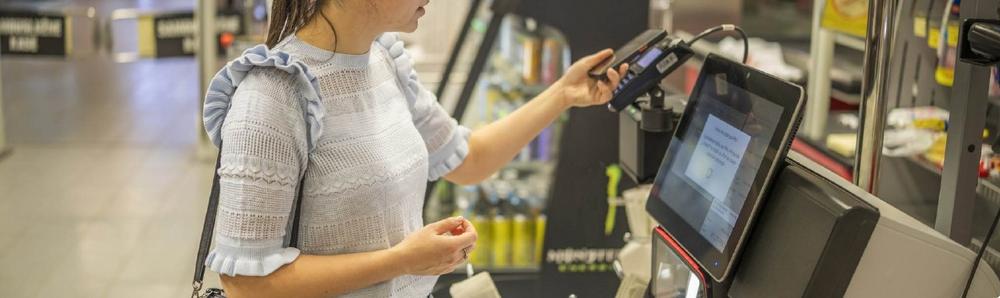
Self-checkout (SCO) and self-service (SB) checkouts, as well as self-scanning, have become significantly more available and used across all sectors in Germany over the past two years. This is confirmed by the Self-Checkout Initiative of the EHI, among other sources.
Self-checkout systems are conquering the retail sector
The latest EHI market survey shows that self-checkout has now become firmly established. The number of stores with fixed self-service checkouts has increased by 143% in the last two years, reaching over 10,366 branches by August 2025. This means that one in every 18 checkouts in German retail is now a self-service checkout, and this figure is set to rise.
Self-scanning offers: More comfort for consumers
Self-scanning offers greater convenience for consumers and is also growing rapidly. In 3,646 stores, customers can scan their items themselves while shopping using hand scanners, shopping cart scanners or apps. This represents a 69% increase compared to 2023. Around 2,900 stores offer a combination of self-checkout options for maximum flexibility.
Self-checkouts are becoming increasingly established across all sectors
Around 60% of stores with self-checkouts are in the food retail sector, offering an average of 3.98 self-checkouts per store. Card payment is the preferred method of payment here: only around 30% of grocery retailers still accept cash at self-checkouts. 21% of all self-checkouts are now located in drugstores. Around 40% of the approximately 5,200 drugstores in Germany offer self-service checkouts to customers. Third place goes to DIY and home improvement stores, which account for 8% of all stores measured by the total number of stores with self-checkout counters. The range of self-checkout solutions is also growing in the clothing sector. Around 600 stores already offer this option.
Why are more and more retailers choosing to install self-checkout systems?
Self-checkout registers have become an integral part of the German retail landscape, as reflected in consumer usage rates. According to a recent girocard study 67% of respondents said they used them when available — a significant increase on the previous year’s figure of 56%. Younger consumers in particular use self-service checkouts. A survey by KPMG’s Consumer Barometers on autonomous stores found that 71% of consumers aged 24 and under often use self-checkout registers.
The technologies behind self-checkout and self-scanning
Self-checkout and self-scanning concepts in retail are based on a variety of technologies, including hardware and software solutions. Both variants are part of the retail platform and are therefore integrated into data processing, including merchandise management, price and inventory data, and corresponding customer loyalty programs. The most important technologies for self-checkout and self-scanning are:
Thalia relies on a self-checkout solution from GK
Many retailers, including Lidl, Aldi, Edeka, dm, Rossmann, and OBI, use self-checkout and self-scanning solutions across various industries. In the summer of 2022, the bookseller launched its self-checkout project in collaboration with GK Software. The GK OmniPOS solution forms the basis for all Thalia checkouts, including SCOs. "The goal is to reduce congestion in the checkout area of bookstores during peak hours and prevent long lines at staffed registers. Thanks to self-checkout, our trained booksellers can focus more on advising customers," said Stephanie Spurzem, Thalia’s Head of Sales Support. Thalia was able to implement the SCOs quickly because they were developed to meet the company’s specific requirements. The SCOs were introduced during ongoing operations. Currently, 416 Thalia stores have 954 self-checkouts (as of December 2025).
Self-checkout is booming. Retailers worldwide are adopting self-service checkouts.
Germany is not the only country where self-checkout is on the rise. Across Europe, it’s clear that these systems are becoming more popular. According to Grand View Research, approximately 8,000 stores in the United Kingdom, 6,000 in France, 4,500 in Spain, 4,000 in Italy, and 3,000 in Poland have this technology. Worldwide growth rates are impressive as well. Based on Data Bridge Market Research data, the global self-checkout systems market is expected to reach $14.55 billion by 2032, growing at an annual rate of 14.20% from an estimated $5.03 billion in 2024.
Self-checkout remains a growth driver
With over 38,000 self-checkout systems installed, Germany is currently the European leader. And global usage is also continuing to grow: self-checkout and self-scanning are here to stay. Both store applications have evolved from a trend to an established feature—with further growth potential and a decisive role for the future of retail.
Would you like to learn more about self-checkout, self-scanning, and other technologies in retail? Contact us now and let us help you evaluate how we can successfully implement your self-checkout strategy!
GK SOFTWARE SE
Waldstraße 7
08261 Schöneck
Telefon: +49 (37464) 84-0
Telefax: +49 (37464) 84-15
http://www.gk-software.com
