Building AI Competence for Better Educational Technology
Breaking News:
Jonglierkurs: 3 Bälle jonglieren lernen für Anfänger am Dienstag, 22. Sept. um 18 Uhr in München
FQ-42 „Vengeance“ findet ein neues Zuhause auf der Creech Air Force Base
Willkommen an Bord: Hochschule Osnabrück begrüßt rund 3.100 neue Erstsemester
Preisträger des diesjährigen Semmelweis-Richter International Journalism Award bekannt gegeben
Dienstag, Sep. 22, 2026
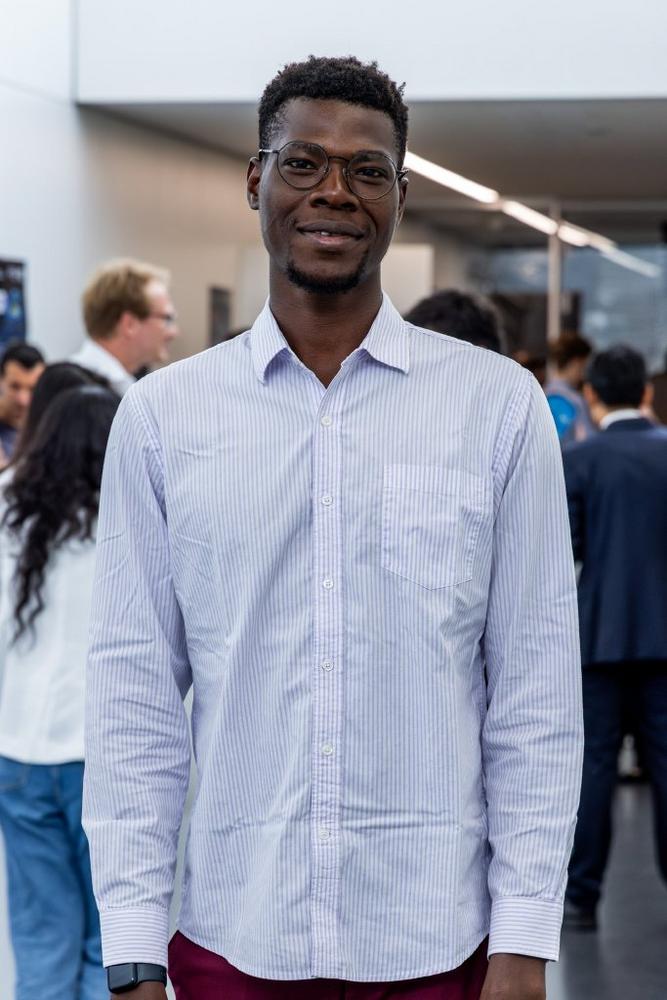
‘Joba learned just how misleading snapshots can be when he moved from his home country of Nigeria to an elite university in South Carolina: “After completing my master’s degree, I was looking for the next ideal step. On Clemson University’s website, I noticed that the pictures were completely covered in snow—and I love snow. But when I actually arrived in Clemson, I realized that it snows there at most once a year, if at all. So, I thought to myself: ‘Oh man, I should have done my research better.’” Yet the trained physicist hadn’t come primarily for the weather, and he intensified his research in the field of machine learning within the context of educational technology.
Teaching and Learning with AI
During his doctoral research, he focused on AI competencies in K-12 education, that is, from kindergarten through 12th grade. These competencies are constantly evolving: “Technology is always advancing. In recent years, it was virtual reality and e-learning platforms; today, it’s AI. The key question, however, remains the same: How can we use this technology to improve teaching and learning?”
After earning his Ph.D. at Clemson, he moved from the East Coast to the Silicon Valley on the West Coast, where he joined the Stanford Institute for Human-Centered Artificial Intelligence (HAI) in California. There, he continued his research on a broader scale – no longer working only with students, but also with teachers and industry partners such as Google and the College Board. Even during his master’s program, he discovered the benefits of combining theory and practice: “In Nigeria, I worked for a branch of a global company – Tek Expert. People of different ethnicities and languages work hand in hand there.”
Science with Impact
‘Joba also sees this as the key to successful research: “Through collaboration with industry, science moves out of the lecture hall and into the public sphere and the real world.” After all, with limited public funding, even the best research projects can fall by the wayside. “You can only visit as many classrooms as your capital, resources, and time allow,” explains ‘Joba. Moreover, the results are often difficult to access, since “very few people read scientific articles.”
Yet it’s worth the effort – ‘Joba is particularly proud of his latest paper, titled “It can not only just predict your future; it can also change it”: a case of two children examining algorithmic bias in machine learning. The effort put into the work paid off, and the article was published in the prestigious Journal of the Learning Sciences. It examines how children engage with AI technologies from a critical perspective. ‘Joba elaborates: “It’s also about students developing a critical perspective through their engagement with AI. By creating machine learning models themselves, they should better understand the social consequences that can arise when certain groups are excluded from technological development.””
Active Participation in the Heilbronn Ecosystem
‘Joba, on the other hand, experienced participation and real-world relevance at this year’s GTF: “My personal highlight was attending the TECH Conference, which was taking place at the time. It was great to see how many people are putting research findings into practice and how the community is thinking about this technology.” The postdoc participated as a panelist at the House of Start-ups in the public fishbowl discussion “Bridging the Gap Between Research and Its Application, Commercialization, and Spin-offs.”
He views the ever-expanding Campus Heilbronn with great respect. With a twinkle in his eye, he says, “A new building goes up here every year. Leave the construction to the Germans.” But it’s not just new complexes that are springing up on campus – collaborations are forming as well. For example, ‘Joba has been in contact with Prof. Kejia Hu from Oxford since the GTF 2025. This year, he was particularly interested in the workshop “Reimagining Academia in the Age of AI” led by HUJI Professor Tomer Shadmy: “We’re united by our interest in how AI will develop and how it will transform education and science.”
Dr. ‘Joba Adisa returned to Stanford with new contacts and research approaches. But the next personal change is already on the horizon for him: “In August of this year, I’ll become a professor of AI and new technologies at Clemson University.” This brings ‘Joba full circle – though he’ll still have to do without snow.
Die TUM Campus Heilbronn gGmbH
Bildungscampus 2
74076 Heilbronn
Telefon: +49 (0) 7131 264180
Telefax: +49 (7131) 645636-27
https://www.chn.tum.de/de
