Why Managing IT Hardware Distribution Is Becoming More Complex Than Ever Without Digitalization

Breaking News:
Freitag, Juli 24, 2026
As IT inventories grow, companies need complete transparency over every asset movement. Without digital processes, manual documentation quickly becomes time-consuming, error-prone and difficult to maintain.
Why does the traditional process of IT distribution reach its limits?
Many organizations still rely on spreadsheets, handwritten records or email communication to document hardware distribution. While these methods may work in small environments, they become inefficient as the number of employees, locations and devices increases.
Manual approvals and documentation slow down equipment handovers, while IT teams spend valuable time answering availability requests, searching for missing devices or correcting incomplete records. At the same time, employees increasingly expect immediate access to approved hardware—regardless of whether they work in the office, remotely or outside business hours.
What kind of challenges appear during IT hardware distribution?
The biggest challenge is maintaining complete visibility throughout the hardware lifecycle. Companies need to know where every device is located, who is using it and when it should be returned.
Without reliable documentation, equipment may remain unused in offices or home workspaces while additional hardware is purchased unnecessarily. Temporary loans for projects, replacements or testing further increase complexity, making manual tracking unreliable and reducing overall asset utilization.
What problems can appear?
Incomplete documentation creates more than inventory issues. IT departments often spend unnecessary time locating equipment instead of supporting users or improving infrastructure.
Poor traceability also complicates audits and compliance requirements. In addition, unclear documentation can lead to disputes over lost or damaged equipment, affecting accountability and collaboration between departments.
How to automate the process of IT distribution in companies?
Modern IT distribution combines Hardware Asset Management (HAM), Mobile Device Management (MDM) and automated locker systems into one connected workflow.
Instead of relying on manual signatures, every checkout and return is recorded automatically. Employees receive approved hardware through standardized workflows, while administrators monitor inventory, user assignments and equipment availability from a central software platform. This reduces administrative work while improving accuracy and process speed.
How can smart lockers support the distribution of IT hardware?
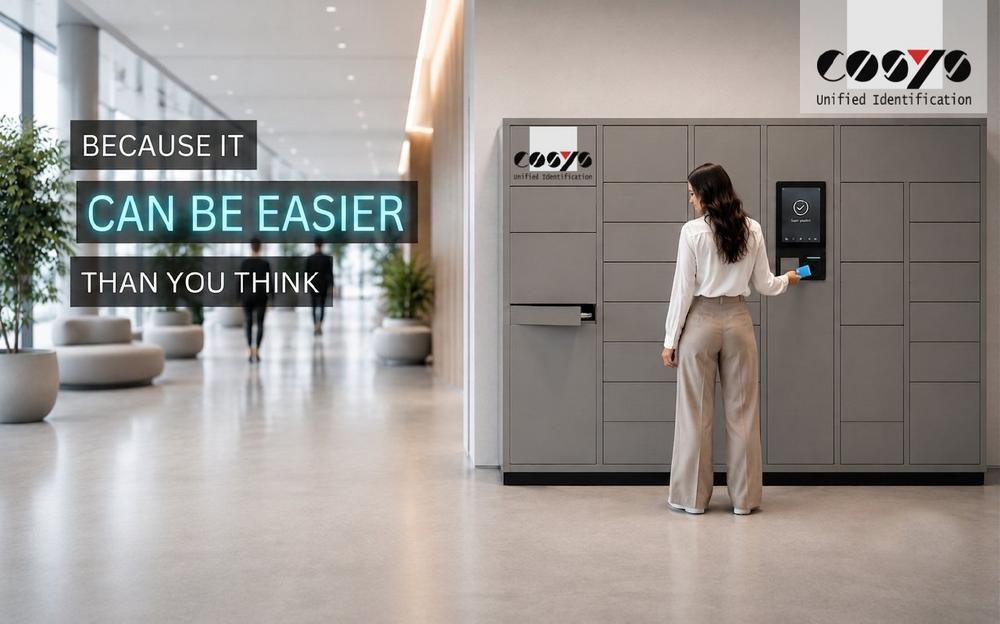
Smart lockers provide secure self-service access to IT equipment at any time. Employees authenticate using ID badges, QR codes or PINs, allowing them to collect approved devices without assistance from the IT department.
Every transaction is documented automatically, creating a complete audit trail that records who accessed which device and when. This improves traceability while reducing manual administration.
Modern locker systems can also be configured for different operational needs. Compartments are available in multiple sizes, integrated power outlets keep returned devices charged, and optional weighing sensors verify whether all expected equipment has been returned. Together, these features improve equipment availability, security and operational efficiency.
How has remote work changed internal IT logistics?
Hybrid work has transformed IT distribution from a centralized process into a decentralized service. Employees now require equipment across multiple offices, branch locations and home workplaces, making traditional distribution models increasingly inefficient.
As a result, organizations must manage the complete hardware lifecycle digitally—from procurement and deployment to maintenance, replacement and return. Automated workflows ensure consistent processes and reliable documentation regardless of employee location.
What role does software play in modern IT distribution using smart lockers?
Software is the foundation of an efficient smart locker solution. While lockers provide secure storage, the software manages access rights, reservations, inventory levels and documentation.
The COSYS Smart Locker Solution integrates with existing ERP and IT systems to create a centralized overview of all hardware movements. Administrators can immediately view available compartments, current assignments and inventory status through a web-based interface.
Its modular design allows organizations to customize locker sizes, charging functions and optional weighing technology according to their operational requirements. This creates a scalable solution that supports standardized workflows while providing complete transparency across the entire distribution process.
Conclusion
As digital workplaces continue to evolve, managing IT hardware becomes increasingly challenging. Manual documentation and isolated processes can no longer provide the transparency and efficiency modern organizations require.
Digital workflows combining Hardware Asset Management, centralized software and smart lockers enable companies to automate hardware distribution while maintaining full visibility throughout the asset lifecycle. The result is lower administrative effort, improved equipment utilization, greater security and a better experience for both IT departments and employees.
Tip:
The COSYS Smart Locker Solution combines intelligent locker hardware with powerful software to digitize IT hardware distribution. Companies benefit from automated documentation, real-time transparency and seamless integration into existing IT infrastructures.
For more information or personal discussion, you can simply reach out to us by phone +49 (0)5062 900 0, by mail anfrage@cosys.de, through our contact form or simply through live-chat on our website.
Die COSYS Ident GmbH mit Sitz in Grasdorf (bei Hildesheim) besteht seit knapp 40 Jahren und ist eines der führenden Systemhäuser im Bereich mobiler Datenerfassungslösungen für Android und Windows. Ein mittelständisches Unternehmen, das seit 1982 die Entwicklung von Identifikationssystemen vorantreibt und heute branchenspezifische Komplettlösungen für nahezu alle gängigen Geschäftsprozesse anbietet. Vom Prozessdesign und der Konzepterstellung, über die Implementierung der Hard- und Software bis hin zum Projektmanagement und maßgeschneiderten Wartungsverträgen, decken wir das komplette Leistungsspektrum der Systementwicklung, Integration und Betreuung ab. Des Weiteren bietet COSYS einen Reparaturservice, WLAN-Funkvermessung, sowie Lösungen für die Bauteil-Rückverfolgung mittels DPM-Codes.
Cosys Ident GmbH
Am Kronsberg 1
31188 Holle – Grasdorf
Telefon: +49 (5062) 900-0
Telefax: +49 (5062) 900-30
http://www.cosys.de
