60 Years Ago: Lille-Bror Nasenius Wins European Rally Championship in an Opel Rekord
Breaking News:
60 Years Ago: Lille-Bror Nasenius Wins European Rally Championship in an Opel Rekord
Vor 60 Jahren: Lille-Bror Nasenius holt mit Opel Rekord die Rallye-Europameisterschaft
Landrat Dr. Mischak bestellt erfahrene Organisatorische Leiter Rettungsdienst
Segel-Kreuzfahrt: Star Clippers schaltet den Sommer 2028 frei
Donnerstag, Nov. 5, 2026
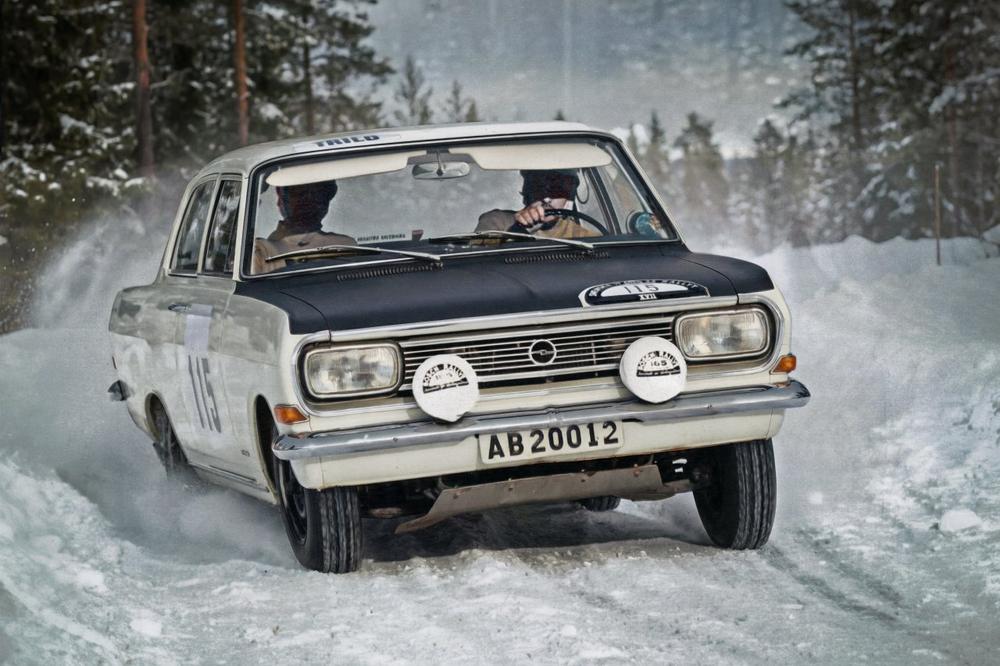
Opel and motorsport have been inextricably linked for decades. Today, the ADAC Opel GSE Rally Cup – and, very soon, Opel’s entry into Formula E – deliver excitement, emotions and top-class performance. Exactly sixty years ago, the manufacturer achieved its first major milestone in rallying: In autumn 1966, the Swede Lille-Bror Nasenius clinched the European Rally Championship – in an Opel Rekord B. The victory in Group 1 (production touring cars) marked a triumph at the very highest level, as the World Rally Championship would not be held until many years later. Additionally, this historic event marked Opel’s breakthrough as a manufacturer of formidable rally cars, culminating in the commanding victory in the 1982 World Rally Championship by Walter Röhrl and Christian Geistdörfer in an Opel Ascona 400.
Today, Opel is once again playing a pioneering role in rallying. With the ADAC Opel GSE Rally Cup and the new Mokka GSE Rally competition car, which delivers up to 207 kW (281 hp) of electric power and 345 Newton metres of torque, Opel is demonstrating – now in its sixth year – what all-electric one-make rallying is capable of. Thrilling, locally emissions-free and featuring an innovative charging infrastructure, the manufacturer offers rally competitions of the highest standard. However, Opel laid the foundations for this together with its partners much earlier – 60 years ago now.
Opel and Lille-Bror Nasenius: Successful rally partners playing a pioneering role
Lille-Bror Nasenius began his motorsport career on motorbikes, which he also used in rallycross. He soon switched to four wheels and secured his first class and overall victories in regional competitions. Opel finally managed to persuade the Swede to turn professional in January 1966 and signed him as a driver.
The timing for entering the world of rallying could have hardly been better for the manufacturer from Rüsselsheim. Whilst the cars bearing the Blitz emblem were already regarded as light, easy to handle and extremely robust, the state-of-the-art CiH engine introduced for the 1966 model year provided another decisive reason. In the top-of-the-range 1.9-litre version, the four-cylinder engine delivered a substantial 66 kW (90 hp) by the standards of the time. Thanks to its low kerb weight of just 990 kilograms, the new Opel Rekord B boasted a power-to-weight ratio that was significantly superior to that of most of its competitors at the time.
For Lille-Bror Nasenius, there were further personal points at play: the Opel Rekord 1900 S was as reliable as it was safe – compelling reasons for the then father of two children, as the two-door saloon served him not only as a car for chasing best times but also as a family car. It was suitable for everyday use, since – apart from different tyres and shock absorbers – the competition vehicle was a standard-specification Rekord B. And it was precisely with this car that Nasenius won both the Swedish Rally Championship and the European Championship for production touring cars that same year – a resounding success and the start of a glorious run.
For the 1967 season, Lille-Bror Nasenius switched to the new Opel Rekord C, which was powered by the same engine. Despite its visibly larger dimensions, it featured a kerb weight of just 1,025 kilograms, yet it was noticeably more manoeuvrable thanks to its precisely guided coil-spring rear axle. In addition, the speedy Swede competed in several races in an Opel Commodore A, the six-cylinder counterpart to the Rekord C. The result for that year: Nasenius became European vice-champion – by just a narrow margin.
In 1968, he switched to the significantly lighter and even more manoeuvrable Rallye Kadett 1900 S – in which he secured four overall victories straight away. And so it continued: in 1969, again in the Rallye Kadett, but with Björn Cederberg as his new co-driver, with whom he formed a genuine dream team from then on and went on to win the Swedish Rally Championship each year in a row until 1971. And in his final two years under contract with Opel, in 1972 and 1973, he drove the then popular Ascona in his usual successful style. Walter Röhrl – one of his direct rivals during that era – remembers very well the “incredibly helpful Swede”, with whom he had “a very collegial, almost friendly relationship, despite the fierce competition”.
For the 1977 season, Lille-Bror Nasenius returned once more to the world of rallying and contested seven championship rounds in an Opel Kadett C 1200 S, finishing first in his class in two of them. His official rallying career thus came to an end after 11 overall victories and 35 class wins, of which he achieved 9 and 31 respectively in and with an Opel.
Opel Automobile GmbH
Bahnhofsplatz 1
65423 Rüsselsheim
Telefon: +49 (6142) 7-70
Telefax: +49 (6142) 77-8409
http://de-media.opel.com/de
